
Wailuku Divorce Decree Records
Wailuku is the county seat of Maui County and the location of the Second Circuit Family Court at Hoapili Hale, which handles every divorce decree filing on Maui. If you live in Wailuku and need to search for a divorce decree, get a certified copy, or file a new case, the courthouse is right in town at 2145 Main Street. The self-help center, the Legal Documents Branch, and the Law Library are all in the same building, making Wailuku one of the more convenient places in Hawaii to navigate the divorce record process. This page covers online searches, in-person copy requests, historical records, and legal aid options available to Wailuku residents.
Wailuku Quick Facts
Second Circuit Family Court Right in Wailuku
The Second Circuit Family Court is at Hoapili Hale, 2145 Main Street, Wailuku, HI 96793. The main phone number is (808) 244-2700. The courthouse is open Monday through Friday from 8:00 AM to 4:00 PM, except on state holidays. Wailuku residents have an advantage that many Hawaii residents do not: the Family Court is literally in their town. Filing a divorce petition, attending a hearing, picking up a decree, or asking the self-help center a question all happen at the same address. No long drive to a different city is needed.
The Legal Documents Branch is in Room 106 of the same building. Their number is (808) 244-2752. For fax requests, the number is (808) 244-2932. This is the office to contact when you need a copy of a Wailuku divorce decree. They handle in-person requests, mail-in requests, and some phone inquiries about what documents are on file. The chief court administrator's line is (808) 244-2929 for administrative matters. The Law Library is in Room 207 at (808) 244-2959 for legal research needs.
For residents who need ADA accommodations at Hoapili Hale, the contact is (808) 244-2855 for District and Family Court matters, or (808) 244-2929 for Circuit Court. You can also email adarequest@courts.hawaii.gov. Wailuku residents with accessibility needs should contact the court before their visit so the right arrangements can be made in advance.
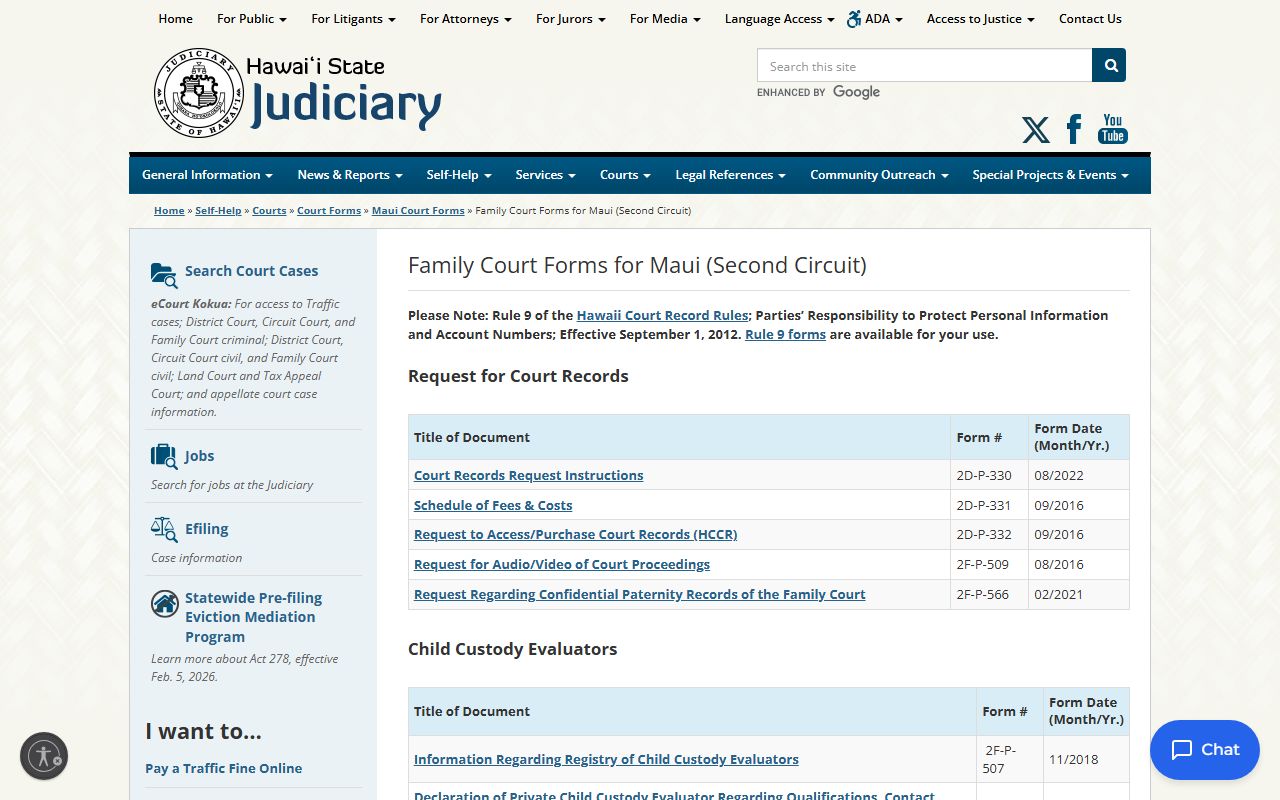
The Second Circuit Family Court forms page covers the divorce petition, proposed decree, and financial disclosure forms used in Wailuku-based divorce cases filed at Hoapili Hale.
Online Search for Wailuku Divorce Decrees
eCourt Kokua is the Hawaii State Judiciary's free public case search tool. Wailuku residents can use it to look up Second Circuit divorce cases without going to the courthouse. The portal is at courts.state.hi.us. No account is needed.
To search for a Wailuku divorce case, select "Maui - Second Circuit Family Court" from the court dropdown. Then enter one party's name. Set the case type to "DV - Divorce." Results show the case number, party names, filing date, and case status. You can also view docket entries and scheduled hearing dates. The final divorce decree document itself is not available online. To get a copy of the actual decree, visit Room 106 at Hoapili Hale or send a mail request to the Legal Documents Branch.
Access to Second Circuit divorce records is governed by the Hawaii Uniform Information Practices Act under HRS § 92F. Divorce decrees are generally public records. A judge can seal portions of a file, but that is not standard. The rules for how these records are kept and accessed are in HRS § 580-41.
Getting Copies at Hoapili Hale
Wailuku residents have the easiest path of any Maui community when it comes to getting a copy of a divorce decree. Walk into Room 106, the Legal Documents Branch, during courthouse hours. Bring a valid photo ID. If you have the case number from eCourt Kokua, give it to the clerk. If you don't have the number, the clerk can look up the case by name. Both plain copies and certified copies are available at the counter.
Certified copies cost a bit more than plain copies but carry full legal standing. You need a certified copy when submitting proof of divorce to a government agency, a financial institution, a court in another state, or for a name change at the Department of Motor Vehicles or Social Security office. A plain copy works for personal reference. The clerk can tell you which type you need for your specific purpose if you are not sure.
For those who prefer to write in, send your request to: Second Circuit Family Court Legal Documents Branch, 2145 Main Street, Room 106, Wailuku, HI 96793. Include both parties' names, the year of the divorce, and the case number if available. Specify plain or certified. Include payment by check or money order to the State of Hawaii and a self-addressed stamped envelope for the return. Fax requests can go to (808) 244-2932. Mail requests take longer, so plan ahead if a deadline is involved.
Note: As of February 1, 2026, the Hawaii Department of Health no longer maintains divorce records. Wailuku residents must request all divorce decree copies directly from the Second Circuit Family Court Legal Documents Branch at Hoapili Hale.
Self-Help Center at Hoapili Hale
The Maui self-help center is inside Hoapili Hale at 2145 Main Street, Wailuku. It is open on Thursdays from 9:00 AM to noon. No appointment is needed. The phone is (808) 463-1360. Self-help staff can walk you through the forms, explain what the court process involves, and answer questions about what the clerk needs at each stage of a divorce case. They do not give legal advice, but the information they provide is grounded and practical.
For Wailuku residents, the convenience factor here is significant. The self-help center, the Legal Documents Branch, the Family Court clerk, and the Law Library are all in the same building. A single visit on a Thursday morning allows you to talk with self-help, pick up forms, and check a case status all in one stop. The Law Library in Room 207 is useful if you need to read statutes or look up case law related to your situation.
Kids First Maui is at (808) 244-2770. The Family Court sometimes requires parents with children to complete a Kids First program before the judge will finalize the divorce. This is especially common in contested custody cases or where the court has concerns about how the parents are communicating. Ask the clerk when you file whether this requirement applies to your situation. Completing it before the hearing date avoids delays.
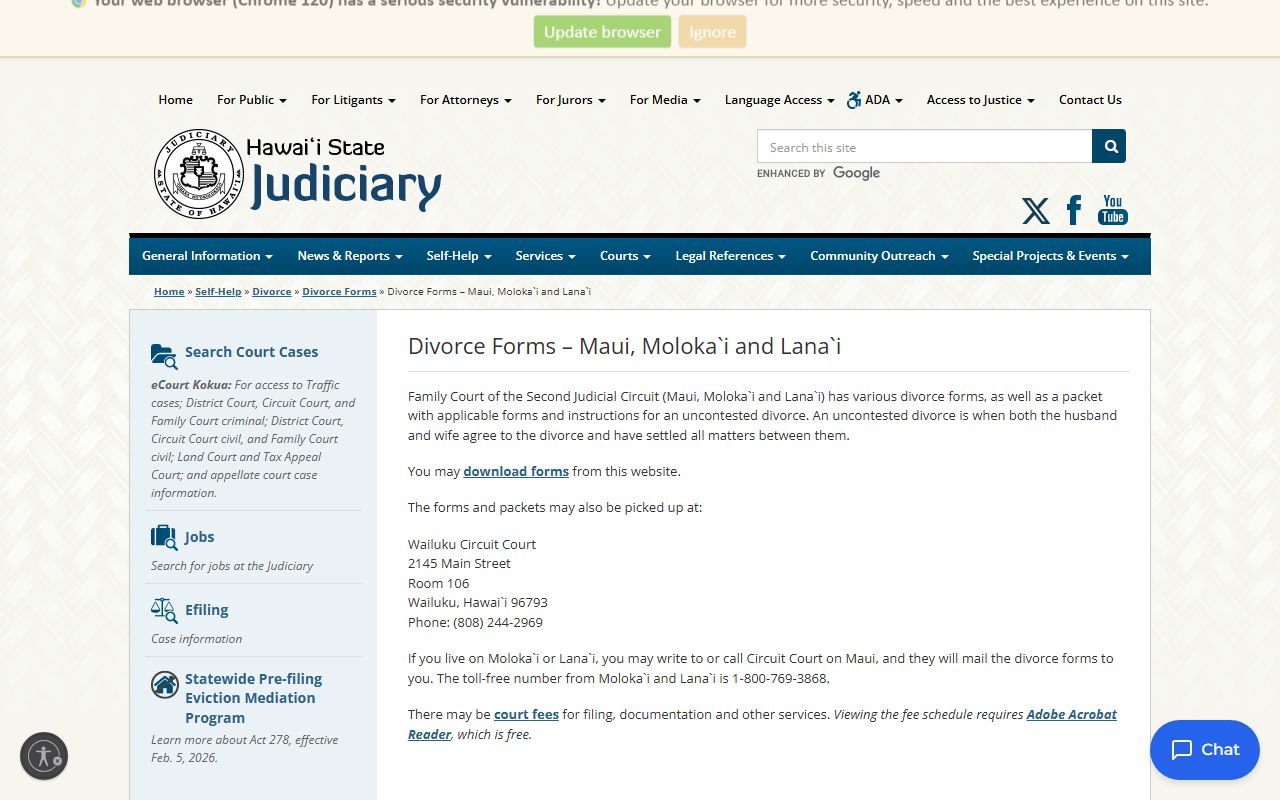
The Maui, Molokai, and Lanai divorce forms page covers the Second Circuit forms used for divorce decree filings in Wailuku, including the petition, proposed decree, and the financial disclosure required by Hoapili Hale.
Legal Aid in Wailuku
The Legal Aid Society of Hawaii has an office right in Wailuku at 24 North Church Street, Suite 401, phone (808) 244-3731. They provide free legal help to eligible Maui County residents, including assistance with family law cases like divorce. If you qualify based on income, they can help with forms, court filings, and in some situations with representation. Wailuku residents are well-placed to use this office since it is a short walk from Hoapili Hale.
Volunteer Legal Services Hawaii is a second route if the Legal Aid Society is not able to take your case. Their number is (808) 528-7046. They also have a statewide number through Legal Aid at (808) 536-4302. Volunteer attorneys handle cases on a rotating basis, so availability varies. Call both to see who can help you first. Getting legal advice before your first filing can save time and prevent mistakes that slow the case down later.
Historical Second Circuit Divorce Records
The Hawaii State Archives in Honolulu holds Second Circuit divorce case files from 1848 through 1900, catalogued on microfilm as MFL 54. These are among the earliest divorce records in Hawaii, predating statehood by over a century. Researchers working on genealogy or historical legal questions who need Wailuku-area divorce records from the 19th century will find this is the primary source. The Family Court at Hoapili Hale does not hold records from that era.
The State Archives website is at ags.hawaii.gov/archives/. It describes the research process, what materials are available for remote requests, and how to schedule an in-person visit. For Second Circuit records specifically, the archives describe the collection scope and the microfilm catalog numbers. If you are searching for a Wailuku divorce case from the 1800s, the archives are where you go.
For records from the 1900s onward, the Second Circuit Family Court is the correct source. eCourt Kokua covers cases filed through the digital era. The clerk at Room 106 can help locate physical or scanned records for older cases that predate the online system. The transition point between archives and court records falls roughly around 1900 for the Second Circuit collection.
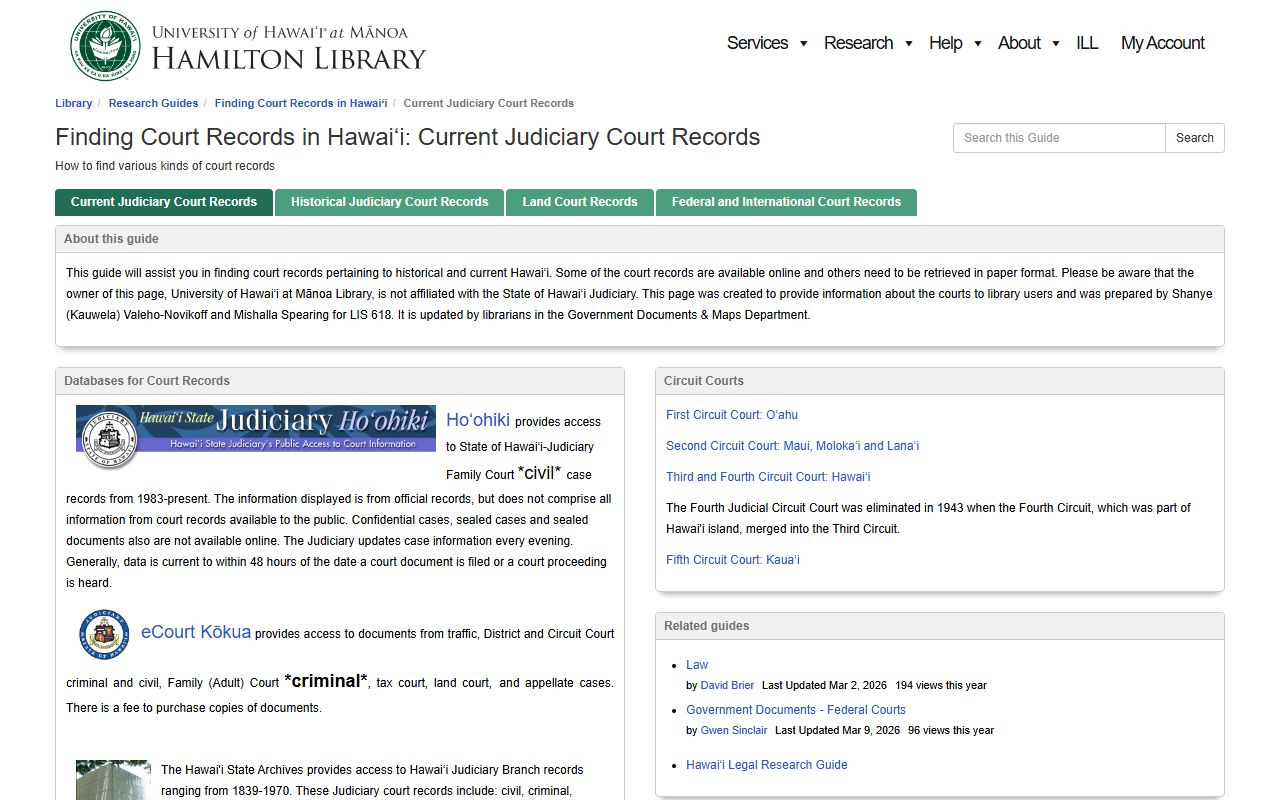
The University of Hawaii library guide on Hawaii courts covers how to find historical divorce decree records including Second Circuit Wailuku files, with links to archives, court databases, and genealogy research resources.
Hawaii No-Fault Divorce and the Decree
Hawaii is a no-fault divorce state. Neither spouse must prove wrongdoing. The only ground the court needs is that the marriage is irretrievably broken. In plain terms, the court must find that there is no real prospect of the couple reconciling. Most Wailuku cases proceed on this basis. Couples who agree on property division, any support obligations, and custody if children are involved can move through an uncontested divorce with less court time and less expense.
The statute governing divorce in Hawaii is HRS § 580-1. It sets out the residency requirements and the grounds for divorce. To file in the Second Circuit, you need six months of residence in Hawaii and three months in the Second Circuit. Wailuku residents who have lived on Maui for those periods are eligible to file at Hoapili Hale without further delay.
When the court finalizes the divorce, it issues the decree. That document is the legal record of the dissolution. It covers all the terms the parties agreed to or the judge ordered. Wailuku residents need the decree for name changes, updating property titles, closing joint accounts, and showing proof of divorce to agencies in other states. Keep at least one certified copy somewhere safe after the case closes. Getting more copies later requires another trip to Room 106 or a mail request.
Nearby Cities
These Maui cities are close to Wailuku and share the Second Circuit Family Court at Hoapili Hale for divorce filings.
Maui County Divorce Records
Wailuku is the county seat of Maui County and the home of the Second Circuit Family Court. The county page covers the broader Maui court system, additional resources across the island, and full details on accessing Maui County divorce decree records.